What Is Robotic Hip Replacement and How Does It Work?


What Is Robotic Hip Replacement?
Robotic Hip Replacement is a modern approach to hip joint replacement in which a surgeon uses computer-assisted technology to plan and perform parts of the procedure with greater control. The hip is a ball-and-socket joint formed by the femoral head and acetabulum. When severe hip arthritis, avascular necrosis, fracture, or other joint damage causes persistent pain and limited movement, total hip replacement may be considered. During the procedure, damaged bone and cartilage are removed and replaced with artificial components. Robotic assistance does not replace the surgeon; rather, it provides imaging-based planning and guidance during surgery. Depending on the system, preoperative imaging such as CT may be used to create a three-dimensional model and plan implant size, position, and alignment.
How Does Robotic Hip Replacement Work?
The robotic-assisted hip replacement process generally begins with a detailed orthopedic assessment, medical history, physical examination, and appropriate imaging. If robotic surgery is suitable, the surgeon may use a CT scan to create a three-dimensional representation of the patient's hip anatomy. This digital model helps with 3D surgical planning, including implant positioning and the amount of bone preparation required. During surgery, the robotic system provides guidance based on the preoperative plan while the surgeon remains responsible for surgical decisions and instrument control. The damaged femoral head and acetabular surfaces are prepared, followed by placement of the artificial socket and femoral component. The technology can help the surgeon reproduce the planned orientation and alignment of the components according to the patient's anatomy.
Who May Need Robotic Hip Replacement?
Total Hip Replacement may be considered when hip pain and disability significantly interfere with walking, sleeping, stairs, work, or everyday activities and appropriate non-surgical treatments have not provided sufficient relief. Common conditions include hip osteoarthritis, rheumatoid arthritis, osteonecrosis or avascular necrosis, and certain fractures or structural problems. Robotic assistance is not automatically required for every patient undergoing hip replacement. The appropriate surgical approach depends on the diagnosis, anatomy, bone quality, activity level, medical history, and surgeon's assessment. A detailed consultation helps determine whether conventional or robotic-assisted replacement is appropriate. The American Academy of Orthopaedic Surgeons notes that non-surgical treatment may include exercise, physical therapy, medication, and selected injections before replacement is considered when symptoms remain problematic.
What Are the Potential Benefits of Robotic Hip Replacement?
The potential advantage of robotic-assisted hip surgery is patient-specific planning and technology-supported execution. Three-dimensional imaging can help the surgeon understand individual anatomy before entering the operating room and plan implant size, orientation, and positioning. During surgery, robotic assistance can provide guidance that helps the surgeon follow the planned bone preparation and component placement. Proper positioning of hip replacement components is important because the artificial joint needs to function smoothly within the patient's anatomy. However, robotic technology does not guarantee a particular outcome and does not eliminate the normal risks associated with hip replacement, such as infection, blood clots, fracture, or dislocation. The suitability and expected benefits should therefore be discussed individually with an experienced orthopedic surgeon.
Robotic Hip Replacement in Lucknow
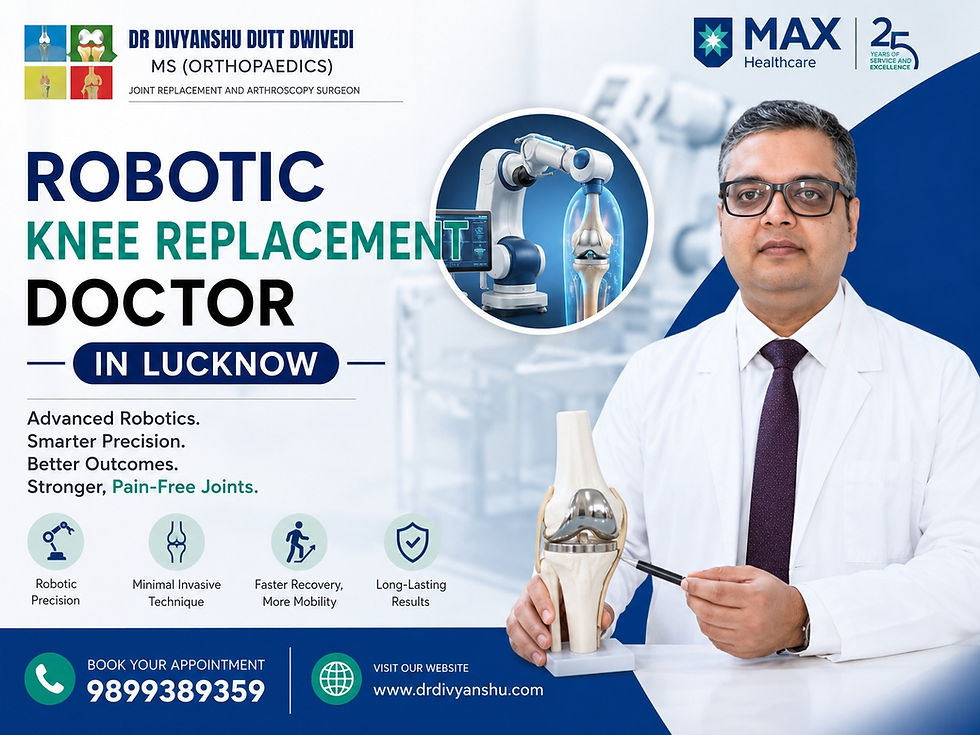
Patients searching for a Robotic Hip Replacement Surgeon in Lucknow can begin with a consultation focused on diagnosis, treatment options, surgical planning, and expected recovery rather than technology alone. Dr. Divyanshu Dutt Dwivedi provides orthopedic and joint replacement consultation for patients with hip and other musculoskeletal conditions. During consultation, patients can discuss whether robotic-assisted replacement is appropriate, what imaging may be required, which implant options are available, and what rehabilitation may involve. Recovery varies according to factors such as age, physical condition, surgical approach, overall health, and adherence to rehabilitation instructions. Early mobility, walking exercises, strengthening, and physiotherapy may form part of recovery under medical guidance. For appointment-related information, patients can contact +91-9899389359.
Conclusion
Robotic Hip Replacement combines established joint replacement surgery with computer-assisted planning and technology-guided surgical execution. It can be useful for selected patients when detailed anatomical planning and implant positioning are important. However, the decision to undergo robotic-assisted or conventional hip replacement should be based on the patient's condition, anatomy, treatment goals, and surgeon's clinical assessment. Understanding the procedure, potential benefits, risks, recovery, and available alternatives can help patients approach treatment with realistic expectations and informed questions.
Frequently Asked Questions
1. Does a robot perform the entire hip replacement?
No. Robotic systems assist the orthopedic surgeon with planning and surgical guidance. The surgeon remains responsible for clinical decisions and the operation.
2. Is robotic hip replacement the same as total hip replacement?
They are not exactly the same term. Total hip replacement describes the procedure, while robotic assistance describes technology that may be used to plan and guide it.
3. Does robotic hip replacement require a CT scan?
Some robotic systems use a preoperative CT scan to create a three-dimensional model and plan implant positioning. The imaging protocol depends on the system and surgeon.
4. Who is suitable for robotic hip replacement?
Suitability depends on the diagnosis, anatomy, bone condition, symptoms, medical history, and whether hip replacement itself is appropriate.
5. Can hip arthritis require replacement surgery?
Yes. Severe arthritis can damage cartilage and cause persistent pain and stiffness. When appropriate non-surgical treatment is insufficient, total hip replacement may be considered.
6. Can avascular necrosis lead to hip replacement?
Yes. Advanced osteonecrosis can damage or collapse the femoral head and may eventually require hip replacement depending on the severity.
7. Is robotic hip replacement more precise?
Robotic systems can provide computer-assisted planning and guidance for implant positioning and bone preparation, but surgical results depend on many patient and surgical factors.
8. How long does hip replacement recovery take?
Recovery varies between patients. Walking and rehabilitation generally begin early, while strength, mobility, and return to normal activities progress gradually.
9. Is robotic hip replacement safe?
Hip replacement is a major surgery with potential risks. Robotic assistance does not remove those risks, so suitability and complications should be discussed with the treating surgeon.
10. How can I consult a robotic hip replacement surgeon in Lucknow?
Patients can arrange an orthopedic consultation to discuss symptoms, imaging, diagnosis, surgical options, robotic technology, implants, and rehabilitation requirements.


Comments