Is Robotic Knee Replacement Better Than Traditional Knee Replacement?


Knee replacement has evolved with advances in surgical planning and technology. Robotic Knee Replacement in Lucknow uses computer-assisted systems to help surgeons plan and perform selected knee replacement procedures. Traditional knee replacement remains an established treatment for advanced arthritis and severe joint damage. The choice between these approaches is not simply about which technology is newer. Dr. Divyanshu Dutt Dwivedi considers knee condition, symptoms, alignment, imaging, mobility and overall health before recommending an appropriate treatment option.
What Is Robotic Knee Replacement?
Robotic-assisted knee replacement combines the surgeon’s expertise with technology that supports detailed preoperative planning and controlled bone preparation. The system can help create a three-dimensional understanding of the patient's knee anatomy and assist with implant positioning during surgery.
Traditional knee replacement is performed using established surgical techniques, with the surgeon assessing anatomy and using instruments to prepare the knee and position the implant. Both approaches aim to relieve pain, improve mobility and restore knee function. Robotic assistance does not independently perform the operation; the orthopedic surgeon remains responsible for clinical decisions and surgical execution.
Is Robotic Knee Replacement Better Than Traditional Surgery?
There is no universal answer that robotic knee replacement is better for every patient. Robotic technology may offer advantages in planning, alignment assessment and implant positioning, particularly in appropriately selected cases. However, these potential advantages do not mean every patient requires robotic assistance.
The final decision should consider the severity of knee arthritis, deformity, bone condition, symptoms, activity level, medical history and surgeon assessment. Dr. Divyanshu Dutt Dwivedi evaluates these factors before discussing whether robotic-assisted or traditional knee replacement is suitable. The goal is appropriate treatment rather than choosing technology simply because it is available.
How Does Robotic Knee Replacement Differ From Traditional Knee Replacement?
The main difference is the level of technology used for planning and surgical assistance. In robotic-assisted surgery, imaging and computer-based planning can help the surgeon assess knee anatomy and determine an individualized surgical plan before the procedure.
During traditional knee replacement, the surgeon uses established techniques and surgical instruments to prepare the damaged joint and position the replacement components. In both procedures, the surgeon controls the operation. Knee replacement surgery is designed to remove damaged joint surfaces and replace them with prosthetic components. Recovery depends on several individual factors rather than the surgical approach alone.
What Are the Potential Benefits of Robotic Assistance?
One potential benefit of robotic technology is more detailed preoperative planning. It can help the surgical team understand knee anatomy, assess alignment and plan bone preparation and implant positioning according to the patient's anatomy. This may be particularly useful in selected complex or anatomically challenging cases.
However, patients should avoid assuming that robotic surgery automatically means faster recovery, less pain or a better long-term result. Outcomes depend on appropriate patient selection, surgical technique, implant choice, rehabilitation and individual health. Dr. Divyanshu Dutt Dwivedi uses clinical evaluation alongside available technology to determine the most appropriate treatment strategy for each patient.
Who May Need Robotic Knee Replacement?
Patients with advanced knee osteoarthritis, persistent pain, stiffness, reduced mobility and significant joint damage may eventually require knee replacement when non-surgical treatments no longer provide adequate relief. Robotic assistance may be considered when the patient is an appropriate candidate for knee replacement.
Assessment generally includes medical history, physical examination and relevant imaging. Factors such as age, activity level, deformity, previous surgery, general health and expectations may also influence treatment planning. Not every person requiring knee replacement will necessarily benefit from robotic assistance. A personalized consultation with an orthopedic and joint replacement surgeon is therefore important before making a decision.
Robotic Knee Replacement and Recovery
Recovery after knee replacement involves pain management, early movement, physiotherapy, strengthening exercises and gradual return to normal activities. The recovery timeline varies considerably between patients and should not be judged solely by whether robotic assistance was used.
Patients should follow their surgeon's rehabilitation instructions and attend recommended follow-up appointments. Factors such as physical fitness, age, medical conditions, muscle strength and commitment to rehabilitation can influence progress. Robotic technology may support surgical planning, but successful recovery also depends on appropriate postoperative care and active participation in rehabilitation.
Choosing a Robotic Knee Replacement Surgeon in Lucknow
When considering Robotic Knee Replacement in Lucknow, patients should look beyond the technology itself. Important considerations include the surgeon's orthopedic training, joint replacement experience, understanding of robotic-assisted procedures, hospital facilities, implant options, patient evaluation and postoperative rehabilitation support.
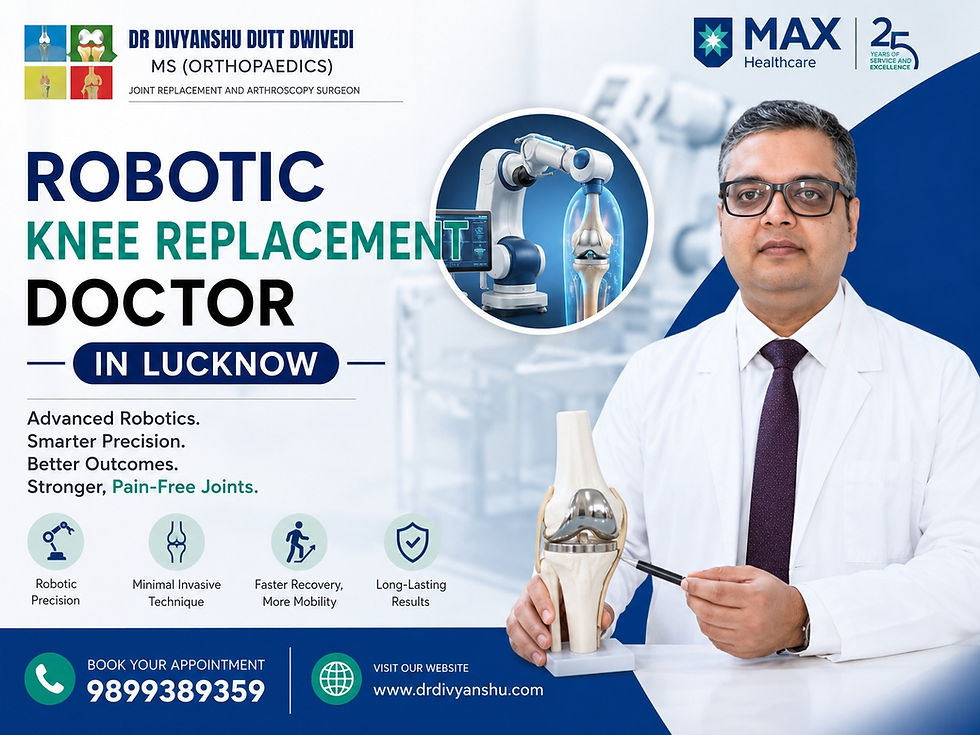
Dr. Divyanshu Dutt Dwivedi is an Orthopaedic and Joint Replacement Surgeon at Max Super Speciality Hospital, Lucknow. Patients can discuss their knee symptoms, diagnosis, imaging and available treatment options during consultation. For appointment-related information, patients can contact +91-9899389359. The appropriate treatment should always be based on individual clinical assessment rather than promotional claims about one surgical technique.
Conclusion
So, is robotic knee replacement better than traditional knee replacement? Robotic assistance can provide advanced planning and technology-supported surgical guidance, but it is not automatically superior for every patient. Both robotic-assisted and traditional knee replacement can be appropriate depending on individual circumstances.
The most important factors are accurate diagnosis, suitable patient selection, experienced surgical care, appropriate implant positioning and structured rehabilitation. Patients considering Robotic Knee Replacement in Lucknow should discuss their condition and treatment options with a qualified orthopedic and joint replacement surgeon before deciding which approach is appropriate.
FAQs About Robotic Knee Replacement
1. Is robotic knee replacement better than traditional knee replacement?
Robotic knee replacement may provide additional planning and alignment support, but it is not automatically better for everyone. Suitability depends on individual anatomy, arthritis severity and clinical assessment.
2. Does robotic knee replacement reduce recovery time?
Recovery varies between patients. Robotic assistance may support surgical planning, but recovery also depends on health, rehabilitation, muscle strength, age and adherence to postoperative instructions.
3. Is robotic knee replacement more accurate?
Robotic systems can assist with surgical planning, alignment assessment and implant positioning. However, accuracy also depends on surgeon expertise, appropriate planning and individual patient anatomy.
4. Does robotic surgery replace the orthopedic surgeon?
No. The surgeon remains responsible for diagnosis, treatment decisions and performing the operation. Robotic technology functions as an assistance tool during selected knee replacement procedures.
5. Who is suitable for robotic knee replacement?
Suitability depends on factors including knee damage, arthritis severity, symptoms, deformity, imaging findings, medical history and overall health. A personalized orthopedic assessment is necessary.
6. Is robotic knee replacement safe?
Robotic-assisted knee replacement can be safely used in appropriately selected patients. As with any surgery, potential risks exist and should be discussed with the treating surgeon.
7. What happens before robotic knee replacement?
Patients generally undergo clinical assessment and appropriate imaging. The surgeon reviews symptoms, medical history, knee damage and treatment options before developing an individualized surgical plan.
8. How long does robotic knee replacement recovery take?
Recovery differs between individuals. Early movement and physiotherapy are generally important, while return to normal activities depends on healing, strength, mobility and overall health.
9. How do I choose a robotic knee replacement surgeon in Lucknow?
Consider orthopedic and joint replacement expertise, relevant surgical experience, hospital facilities, patient evaluation, treatment planning, rehabilitation support and the surgeon's approach to individualized care.
10. Where can I consult for robotic knee replacement in Lucknow?
Dr. Divyanshu Dutt Dwivedi provides orthopedic and joint replacement consultation at Max Super Speciality Hospital, Lucknow. Patients can contact +91-9899389359 for appointment information.


Comments