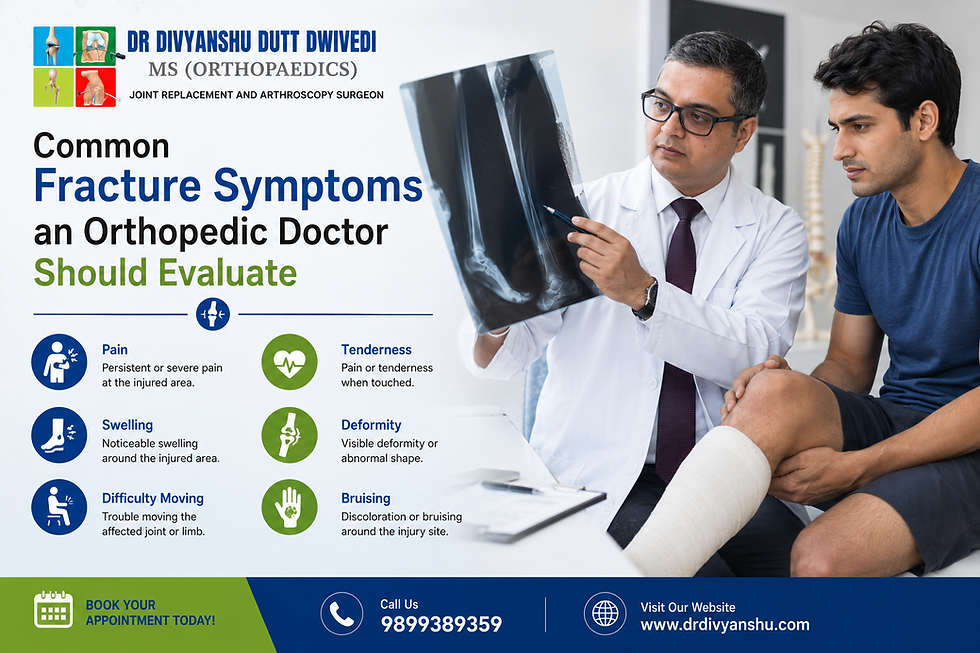
Common Fracture Symptoms an Orthopedic Doctor Should Evaluate Before They Become Serious

A bone fracture can happen unexpectedly, whether from a fall, sports injury, road accident, or even a simple misstep. While some fractures cause immediate and severe pain, others develop gradually and are often mistaken for a sprain, muscle strain, or bruise. Ignoring these symptoms can delay treatment, leading to poor bone healing, chronic pain, reduced mobility, or long-term joint problems.
Recognizing fracture symptoms early is one of the most important steps toward a successful recovery. Seeking timely evaluation from the Best Orthopedic Doctor in Lucknow can help identify the severity of the injury and ensure the right treatment begins as soon as possible. An orthopedic specialist performs a detailed physical examination and recommends imaging tests, such as X-rays, CT scans, or MRI scans, to accurately diagnose the fracture and develop an appropriate treatment plan.
In this article, you'll learn about the most common fracture symptoms, the difference between fractures and sprains, emergency warning signs, available treatment options, recovery expectations, and when it's time to consult an orthopedic specialist.
What Is a Bone Fracture?
A bone fracture is a crack or complete break in a bone caused by excessive force or weakened bone strength. Although many people use the terms "broken bone" and "fracture" differently, they actually describe the same condition.
Fractures vary depending on their location and severity. Some heal with simple immobilization, while others require surgery to restore proper bone alignment.
Common types of fractures include:
Hairline (stress) fractures
Closed fractures
Open (compound) fractures
Displaced fractures
Non-displaced fractures
Compression fractures
Greenstick fractures (common in children)
Prompt diagnosis is essential because each fracture requires a different treatment approach. Delaying care can increase the risk of improper healing and future complications.
Common Causes of Bone Fractures
Bones are strong, but they can break when exposed to significant force or repetitive stress. Understanding the common causes of fractures can help reduce your risk of injury.
Some of the most common causes include:
Falls at home, work, or outdoors
Road traffic accidents
Sports-related injuries
Workplace injuries
Osteoporosis or weak bones
High-impact trauma
Repetitive stress from running or athletics
Direct blows during contact sports
Older adults, athletes, and individuals with osteoporosis are particularly vulnerable because of decreased bone strength or repeated physical stress.
10 Common Fracture Symptoms an Orthopedic Doctor Should Evaluate
1. Persistent Pain After an Injury
Pain is usually the first symptom of a fracture. Unlike muscle soreness, fracture pain is often sharp, localized, and worsens with movement or pressure. If pain continues despite rest or becomes more severe over time, it should never be ignored.
2. Swelling Around the Injured Area
Swelling develops as the body's natural response to injury. While swelling can occur with sprains, severe swelling combined with intense pain may indicate a bone fracture. The affected area may also become warm and tender to touch.
3. Bruising or Skin Discoloration
Damage to blood vessels around the fractured bone often causes bruising. In some cases, bruising appears immediately, while in others it develops over the next 24 to 48 hours. Extensive bruising may indicate a more significant injury.
4. Visible Bone Deformity
A limb that appears bent, twisted, shortened, or out of its normal position is a strong indicator of a displaced fracture. This type of injury requires urgent orthopedic evaluation and should never be treated at home.
5. Difficulty Moving the Injured Limb
If you cannot comfortably bend your knee, lift your arm, rotate your wrist, or move your ankle after an injury, a fracture should be considered. Restricted movement often occurs because the bone can no longer support normal function.
6. Inability to Bear Weight
Difficulty standing or walking after an injury is a common symptom of fractures involving the hip, leg, ankle, or foot. Continuing to walk on a fractured bone may worsen the injury and delay healing.
7. Tenderness Directly Over the Bone
A fractured bone is usually extremely tender when touched. Unlike muscle injuries, where pain is spread over a larger area, fracture pain is concentrated at a specific point along the bone.
8. A Popping or Cracking Sound
Some people hear or feel a snap, crack, or popping sensation at the moment of injury. Although this doesn't occur in every fracture, it is an important warning sign that should be evaluated by an orthopedic doctor.
9. Numbness or Tingling
A fracture may compress nearby nerves or blood vessels, causing numbness, tingling, weakness, or loss of sensation in the affected limb. These symptoms require prompt medical attention to prevent long-term nerve damage.
10. Bone Protruding Through the Skin
An open fracture occurs when the broken bone pierces the skin. This is a medical emergency because it carries a high risk of infection and significant blood loss. Immediate hospital treatment is essential.
Fracture vs. Sprain: How to Tell the Difference
Many people mistake fractures for sprains because both cause pain, swelling, and bruising. However, understanding the difference can help you seek the right treatment.
Fracture | Sprain |
Break or crack in the bone | Injury to ligaments |
Severe localized pain | Pain around the joint |
May cause visible deformity | Usually no deformity |
Difficulty bearing weight | Mild to moderate difficulty |
Requires imaging for confirmation | Often diagnosed clinically |
Since symptoms frequently overlap, only a medical evaluation and imaging tests can accurately determine whether the injury is a fracture or a sprain.
Emergency Warning Signs
Seek immediate medical care if you experience:
Bone visible through the skin
Severe bleeding
Significant deformity
Loss of sensation
Cold or pale fingers and toes
Inability to move the injured limb
Severe swelling after major trauma
Intense pain that rapidly worsens
Receiving emergency treatment promptly can prevent permanent complications and improve recovery.
Who Is at Higher Risk of Fractures?
Although fractures can affect anyone, certain groups face a higher risk.
These include:
Older adults with osteoporosis
Athletes involved in contact sports
Children during active play
Individuals with vitamin D or calcium deficiency
People with previous fractures
Construction and industrial workers
Individuals involved in road accidents
Maintaining strong bones through proper nutrition, exercise, and regular health checkups can significantly reduce fracture risk.
How Orthopedic Doctors Diagnose Fractures
Diagnosing a fracture begins with a detailed discussion about how the injury occurred, followed by a thorough physical examination. The orthopedic doctor assesses pain, swelling, tenderness, deformity, circulation, and range of motion before recommending imaging tests.
Common diagnostic tests include:
X-rays: The first-choice imaging test for most fractures.
CT Scan: Provides detailed images of complex fractures involving joints or multiple bone fragments.
MRI Scan: Useful for detecting stress fractures, hairline fractures, and injuries involving soft tissues such as ligaments and tendons.
Based on these findings, the orthopedic specialist determines the type of fracture and recommends the most effective treatment plan.
Treatment Options for Bone Fractures
Treatment depends on the location, severity, and type of fracture.
Common treatment methods include:
Splints to stabilize the injured area
Casts to keep bones aligned during healing
Braces for selected fractures
Closed reduction to reposition the bone without surgery
Surgery using plates, screws, rods, or pins for complex fractures
Physiotherapy and rehabilitation to restore strength, flexibility, and joint function
Following your orthopedic doctor's instructions is essential for proper bone healing and minimizing the risk of future complications.
Recovery Timeline
Healing time varies depending on age, general health, and the severity of the fracture.
Typical recovery periods include:
Finger fractures: 3 to 6 weeks
Wrist fractures: 6 to 8 weeks
Ankle fractures: 6 to 12 weeks
Stress fractures: 6 to 8 weeks
Hip fractures: Several months, depending on treatment
Even after the bone heals, rehabilitation exercises are often necessary to regain muscle strength, flexibility, and normal movement.
Possible Complications if Left Untreated
Ignoring fracture symptoms can lead to serious health problems, including:
Improper bone healing
Bone deformity
Chronic pain
Joint stiffness
Reduced mobility
Infection in open fractures
Arthritis near the injured joint
Permanent nerve or blood vessel damage
Early diagnosis and appropriate treatment significantly reduce these risks.
Tips to Help Prevent Bone Fractures
Although not every fracture can be prevented, healthy lifestyle choices can strengthen bones and lower your risk.
Helpful prevention tips include:
Eat calcium-rich foods such as dairy products and leafy green vegetables.
Maintain adequate vitamin D levels.
Perform regular weight-bearing exercises.
Wear protective gear during sports.
Use supportive footwear.
Improve home safety to prevent falls.
Avoid smoking and excessive alcohol consumption.
Schedule regular bone health checkups if you have osteoporosis or a family history of weak bones.
When Should You Visit an Orthopedic Doctor?
You should consult the Best Orthopedic Doctor in Lucknow if you experience severe pain, swelling, bruising, difficulty moving a limb, inability to bear weight, or suspect a fracture after an injury. Even if the pain seems manageable initially, delaying medical attention can allow the injury to worsen and increase the risk of improper healing.
Early evaluation allows an orthopedic specialist to diagnose the injury accurately and begin the right treatment plan. Whether the fracture requires a cast, splint, or surgery, timely care improves healing, restores mobility, and helps you return to your daily activities safely.
Frequently Asked Questions (FAQs)
1. What are the common symptoms of a bone fracture?
The most common symptoms of a bone fracture include severe pain, swelling, bruising, tenderness, difficulty moving the affected limb, inability to bear weight, visible deformity, and sometimes a popping or cracking sound at the time of injury. If these symptoms occur after a fall, accident, or sports injury, it is important to seek medical evaluation promptly.
2. How do I know if I have a fracture or just a sprain?
Although fractures and sprains share symptoms like pain and swelling, a fracture usually causes severe localized pain, tenderness directly over the bone, visible deformity, and difficulty bearing weight. A sprain involves ligament damage and typically affects the joint. An orthopedic doctor can confirm the diagnosis through a physical examination and imaging tests such as an X-ray.
3. When should I see an orthopedic doctor for a suspected fracture?
You should consult an orthopedic doctor immediately if you experience persistent pain, significant swelling, bruising, inability to move the injured limb, difficulty walking, numbness, or any visible deformity after an injury. Early diagnosis and treatment help ensure proper bone healing and reduce the risk of complications.
4. Can a small or hairline fracture heal without treatment?
Some minor or hairline fractures may heal with rest and proper immobilization, but they should never be left untreated. Without an accurate diagnosis and appropriate care, even a small fracture can worsen, heal incorrectly, or lead to chronic pain. Consulting an orthopedic specialist is the safest approach.
5. How are bone fractures diagnosed and treated?
Bone fractures are diagnosed through a physical examination and imaging tests such as X-rays, CT scans, or MRI scans, depending on the severity of the injury. Treatment may include splints, casts, braces, pain management, or surgery for complex fractures. After the bone heals, physiotherapy is often recommended to restore strength, flexibility, and normal movement.
Conclusion
Recognizing the common fracture symptoms early can make a significant difference in your recovery and long-term bone health. Persistent pain, swelling, bruising, difficulty moving a limb, or an inability to bear weight should never be ignored, as these signs may indicate a fracture that requires prompt medical attention. Seeking an early diagnosis not only helps ensure proper bone healing but also reduces the risk of complications such as chronic pain, deformity, or limited mobility.
If you or a loved one experiences a suspected fracture after a fall, sports injury, or accident, don't delay seeking professional care. Consulting the Best Orthopedic Doctor in Lucknow can help you receive an accurate diagnosis, personalized treatment, and expert guidance throughout your recovery. With timely orthopedic care and the right treatment plan, you can return to your daily activities safely and maintain strong, healthy bones for years to come.



Comments